Last Sunday I rode out of the Dar es Salaam Road shop with a bunch of eleven riders. Somewhere past
Ngong Road one of the new guys hit a manhole cover at 32km/h. He stayed up. He was lucky. The rider in
front of him had seen it, swerved, and said nothing — because at that speed, with wind in your ears and a
matatu overtaking on your right, nobody hears a thing.
That is the whole point of hand signals. On a group ride your voice does not travel. Your hand does.
So here are the ten signals we use on every Cycle Africa ride. They are simple, they take one afternoon
to learn, and they are the difference between a group that arrives together and a group that arrives
in an ambulance.
One rule before we start: when you see a signal, make the same signal. Pass it back.
The rider at the front can see the pothole. The rider at the back cannot. The signal only works if it
travels down the line.
1. Turning left or right
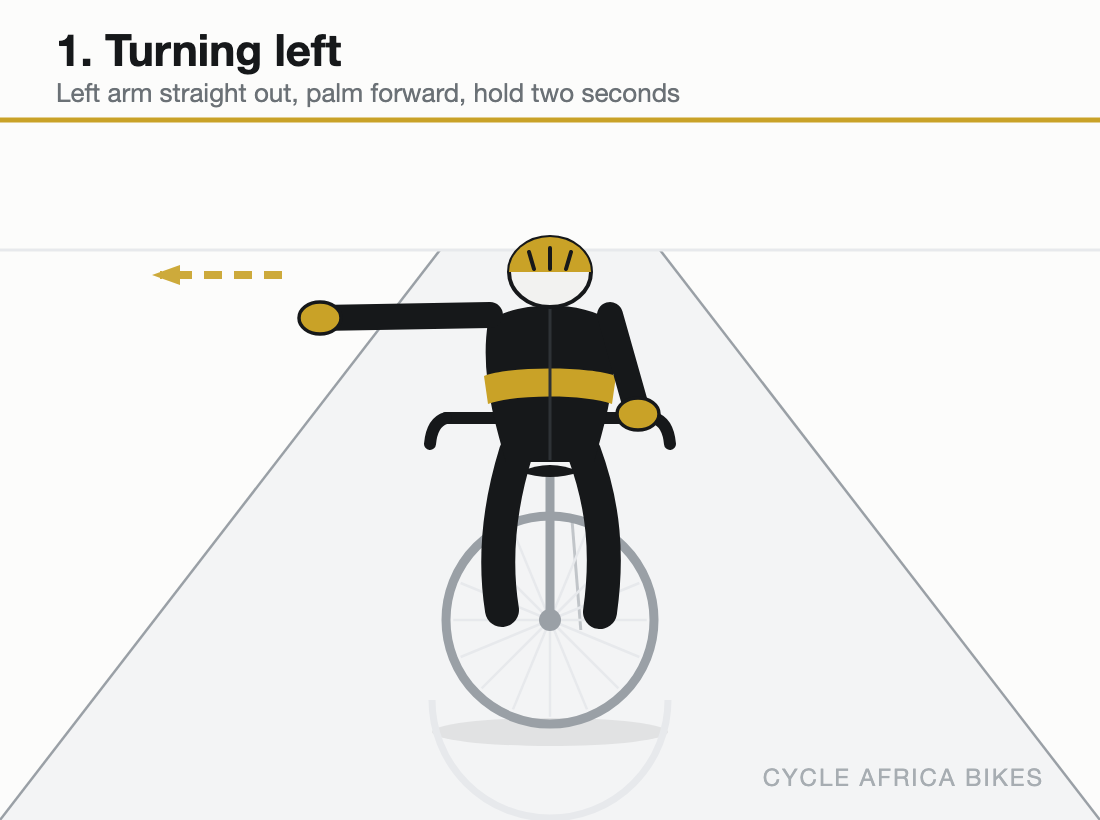
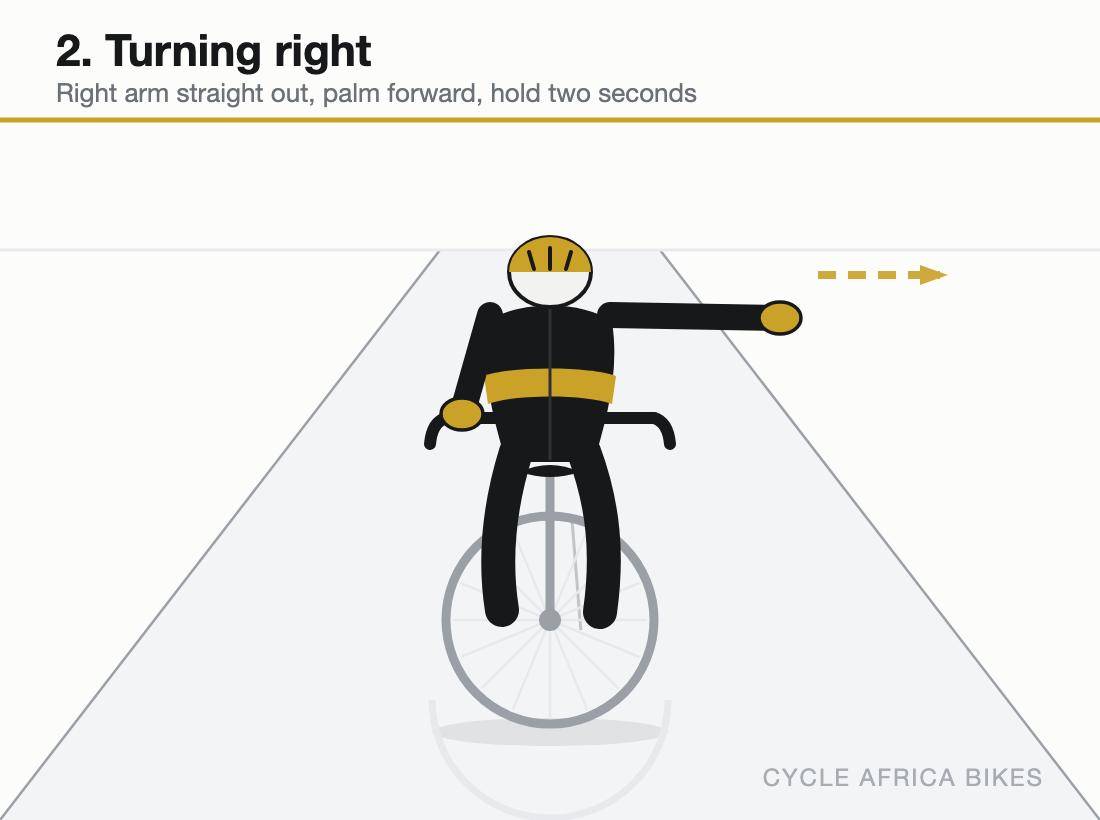
Arm straight out to the side you are turning, palm forward. Hold it for at least two seconds — a quick
flick is not a signal, it is a twitch. Give it early enough that the rider behind you can adjust before
the corner, not during it.
2. Pick up the pace
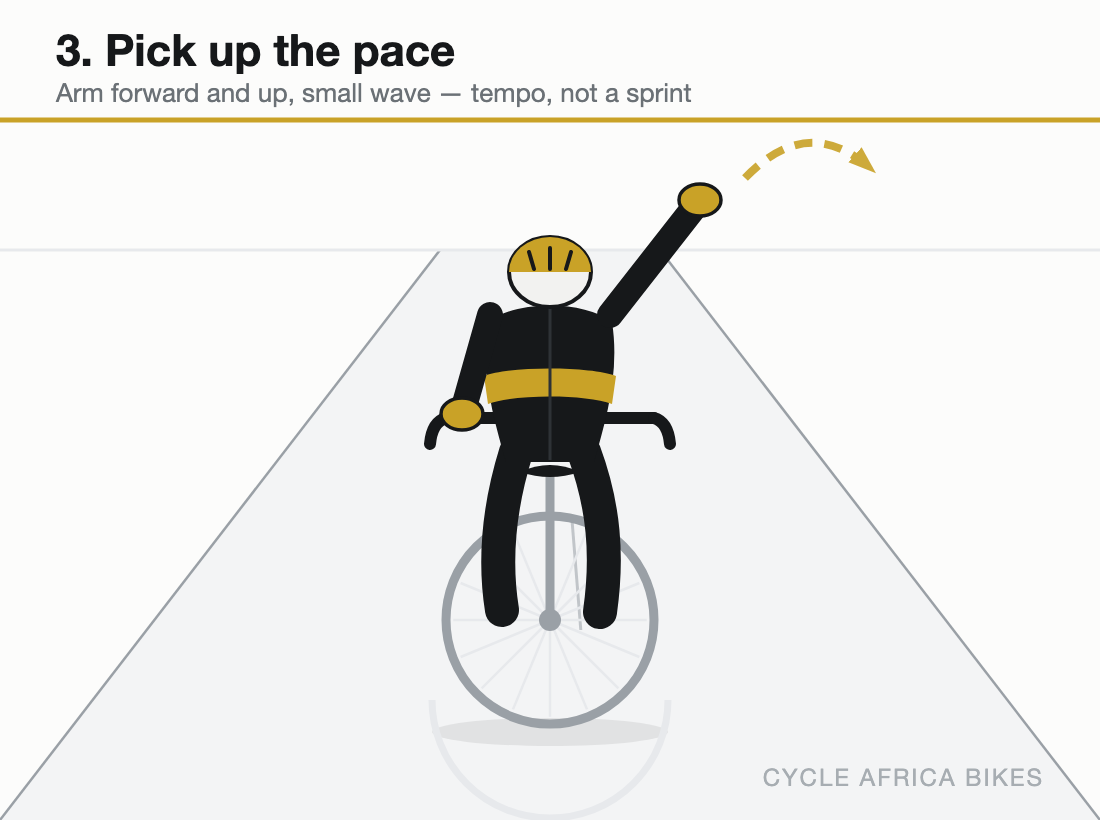
One arm forward and up at about sixty degrees, small up-and-down wave. It means the road ahead is clear
and we are lifting the tempo.
It does not mean sprint. It is a rhythm change, not a race. Keep the wave small — you are saying
“come on, come on”, not flagging a taxi.
3. Rough road ahead
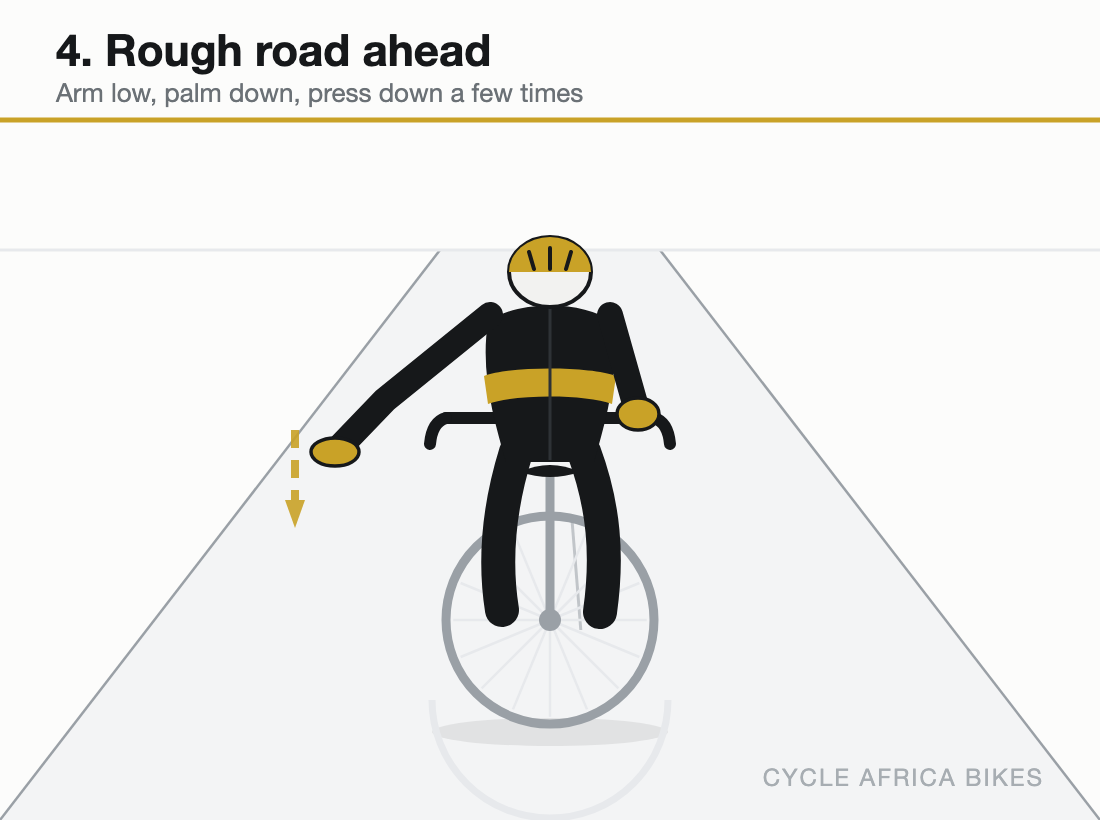
Arm down to the side, palm facing the ground, press down two or three times. Bumps, a bad patch of
tarmac, a speed bump, loose murram at the edge.
Note the movement: you are pressing down, not waving. Waving means something else. This one
gets confused more than any other.
4. Slowing down
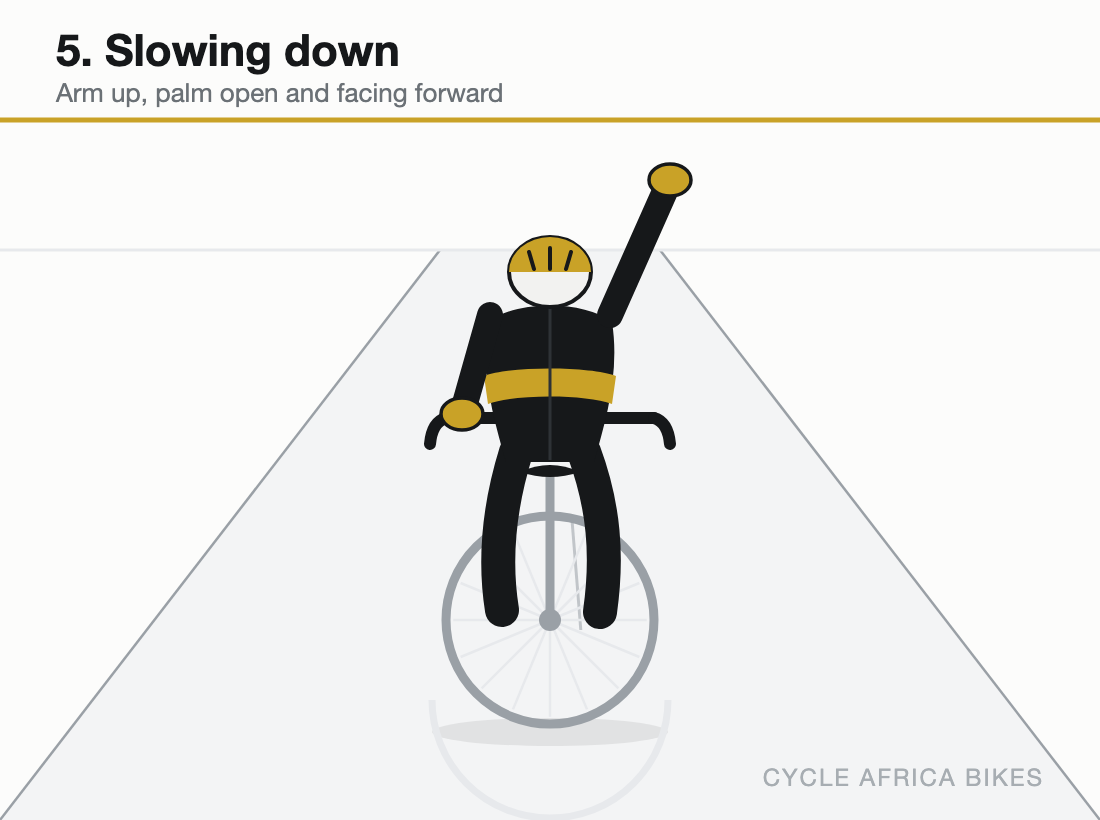
Arm up, palm open and facing forward. Traffic light, junction, something up front. Ease off, cover
your brakes, prepare to stop.
The difference between this and the next one is the hand: open palm means slow, closed fist
means stop. Learn that difference properly.
5. Stop now
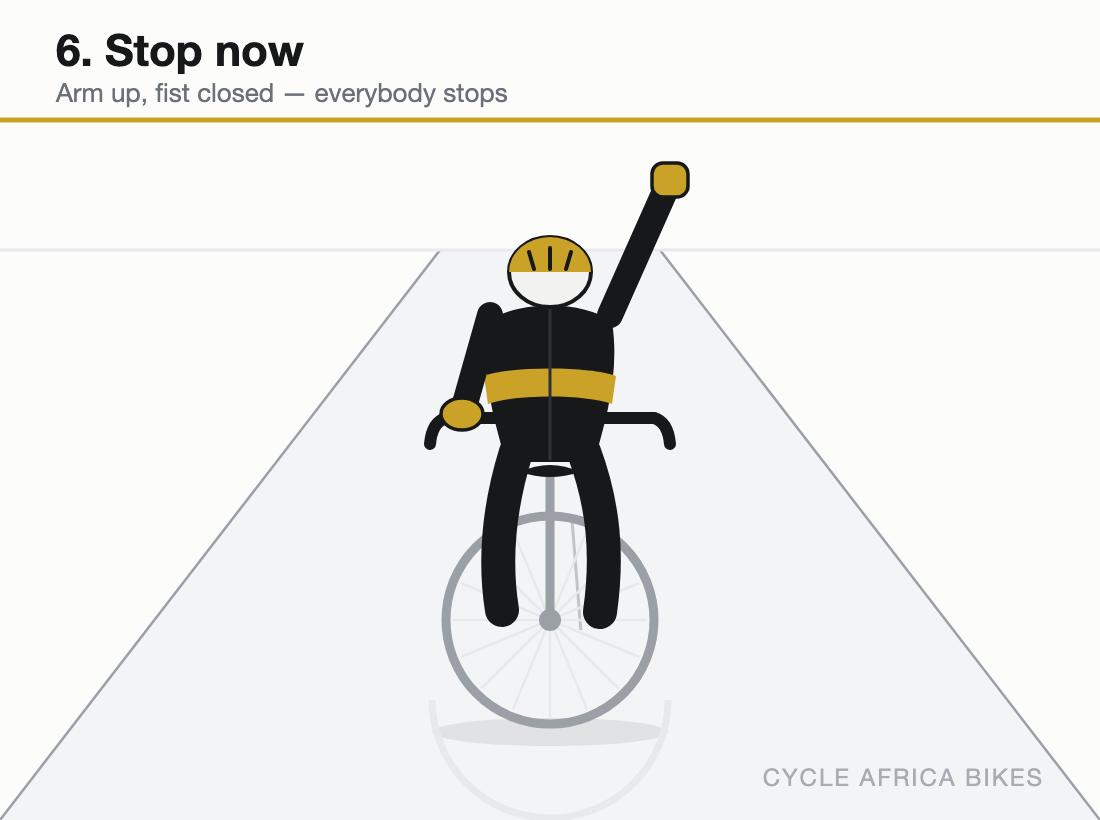
Arm up, fist closed. Emergency, red light, something across the road. Everybody stops.
This is the easiest signal to spot from ten bikes back, which is exactly why it exists. When you see
it, start scrubbing speed immediately. Do not wait for the last second and then grab a handful of brake
with nine riders behind you.
6. Pothole, stone or open drain
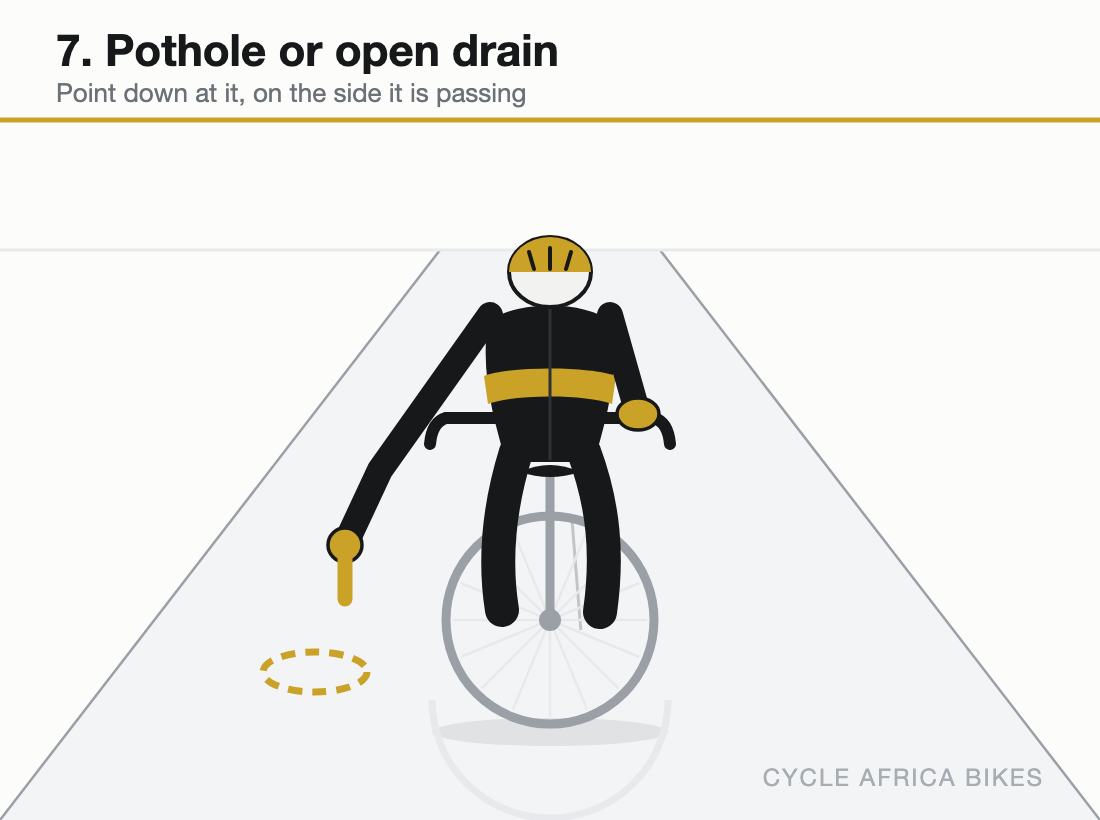
Point down at the thing, on the side it is passing. If you have breath for it, call it too — “hole
left”, “stone right”.
On Nairobi roads this is the signal you will use most. Missing manhole covers, sunken drains after the
rains, broken kerb edges. Point at it. The person behind you cannot see through you.
7. Obstacle on the right — move left
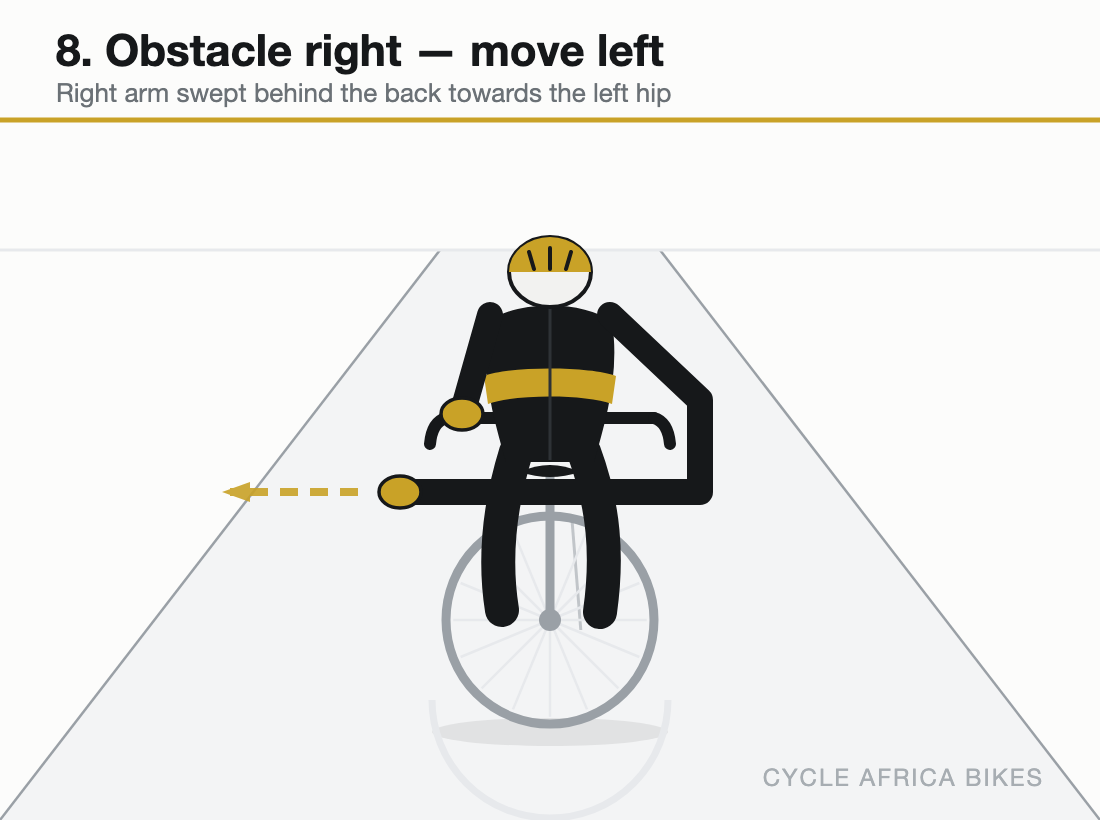
Right arm behind your back, sweeping across towards your left hip. It means there is a parked lorry,
a boda boda or a broken-down car on the right, and the group is moving left around it.
This is the most misread signal on the road. It is not a right turn. It is
“come left, go around”. If you are not certain the group has understood, shout it as well.
8. Single file
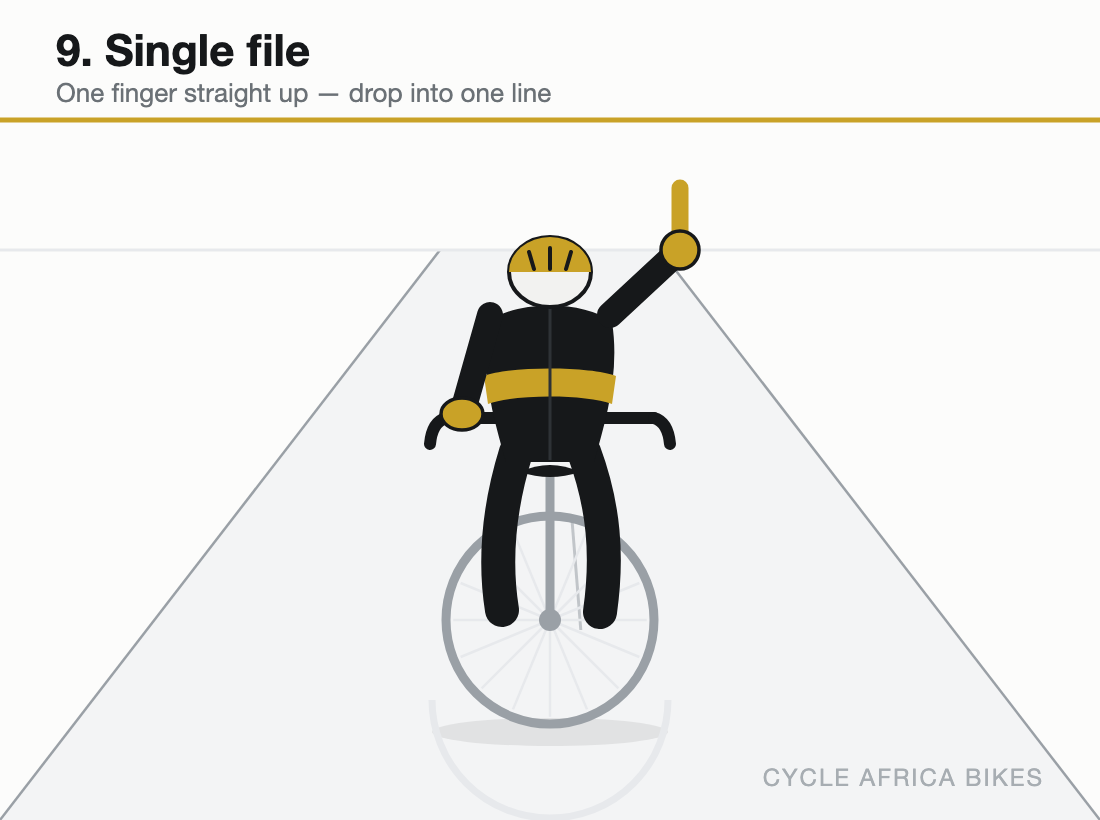
One finger straight up. The road has narrowed, or there is oncoming traffic, so the group drops into
one line. On most Kenyan roads this is your default position, not the exception.
9. Back to two abreast
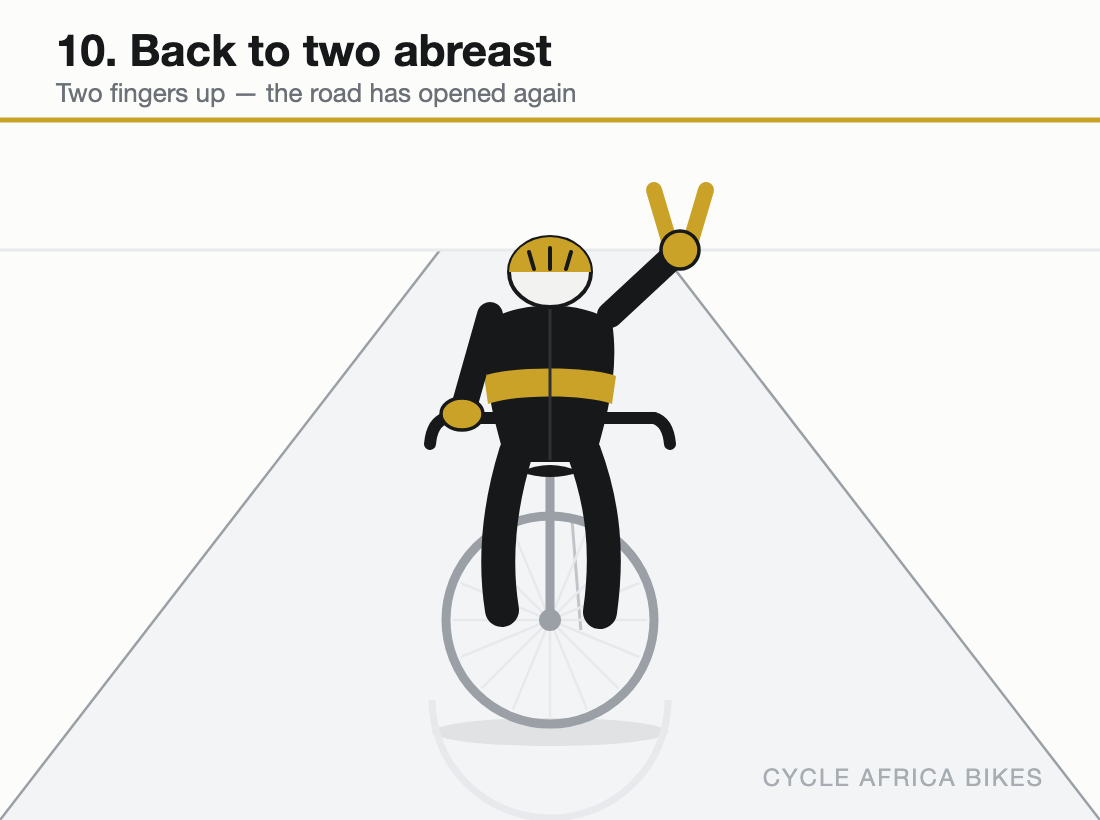
Two fingers up, a V. The road has opened up and it is safe to ride two-by-two again.
10. Car approaching
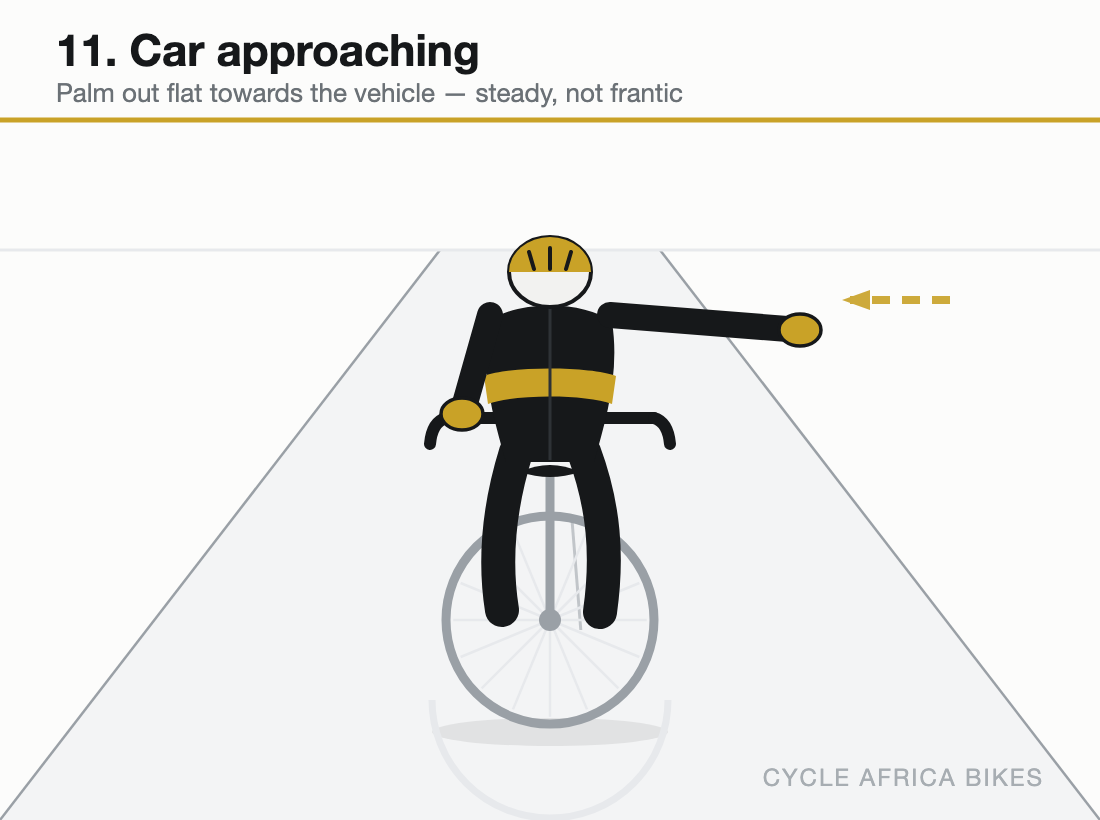
Palm out flat towards the vehicle. It does two jobs — it tells the driver you have seen them and asks
them to give room, and it tells your own group not to swing out into the lane.
Use it early and use it calmly. A raised, steady palm reads as confidence. A frantic wave reads as
panic, and drivers respond badly to panic.
What I actually want you to take from this
Hand signals are not a performance. They are a language. And the language only works if everyone in
the group speaks it — including the person at the back who joined this morning.
So before your next group ride, spend five minutes in the car park running through these ten. Five
minutes. That is the whole investment.
If you do not signal, the rider behind you does not know. If you see a signal and do not pass it on,
the line stops there and the rider at the back rides into the pothole blind.
One clear hand can do more than a hard brake ever will.
Ride out together. Come back together.
Ride with us
We run group rides out of our Dar es Salaam Road showroom in Nairobi, and we will happily walk any new
rider through these signals before we roll out. Come and find us — or bring your bike in for a check
before the next one.
- Flagship showroom: Dar es Salaam Road, Nairobi
- Also at: Junction Trade Centre, Tea Room, Store B132
- WhatsApp or call: +254 725 511 513
Cycle Africa Bikes — Your Life Cycling Partner.